
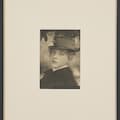
Alfred Stieglitz
Miss S.R.
1905
photogravure,thin paper
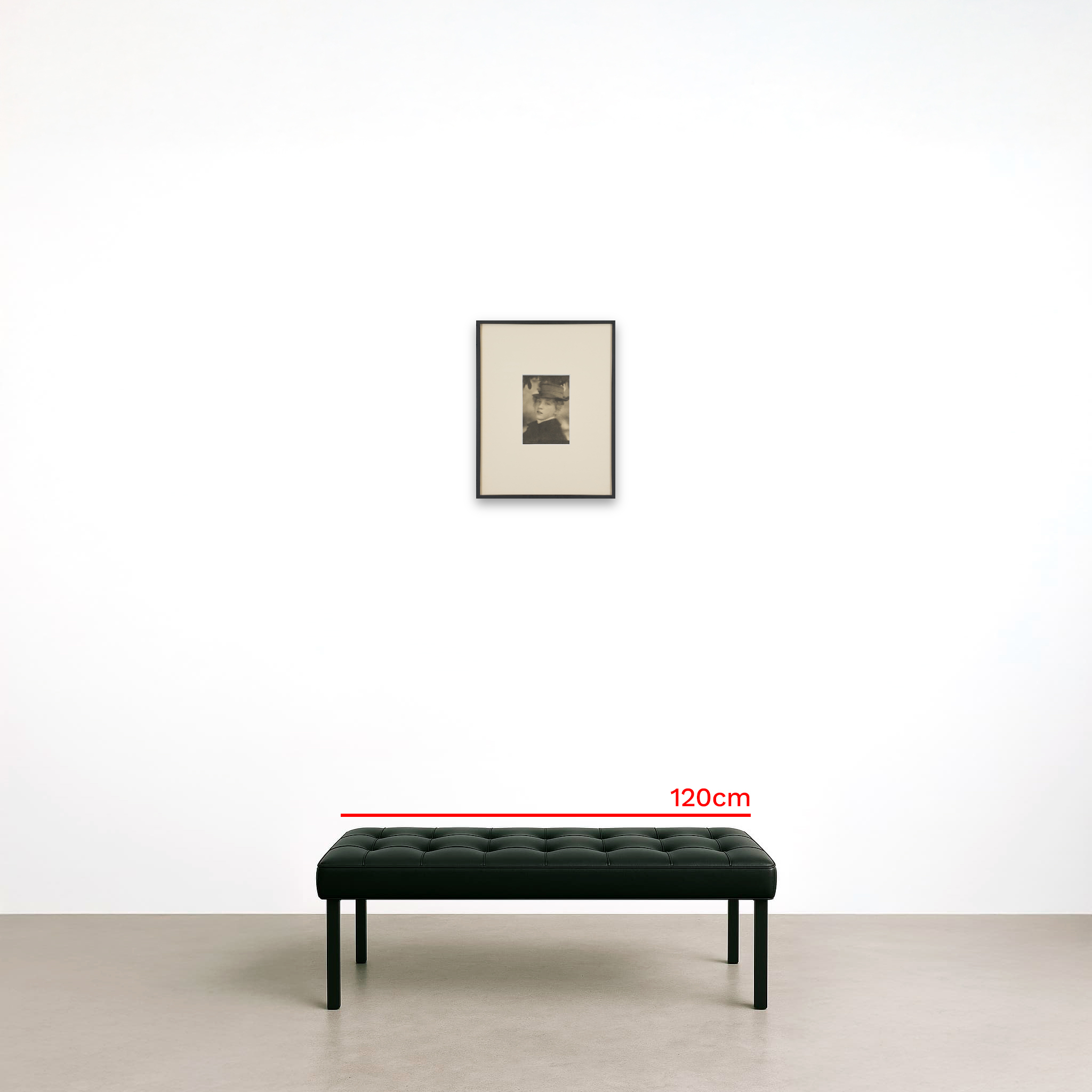
28.2 × 20.2cm
Frame:52.5×41cm
- PRICE
- $1,351.35-
- DOMESTIC POSTAGE
- $19.31-
- TAX
- $137.07-
- TOTAL
- $1,507.72-
- Bitcoin Price
- 0.0189BTC
loading
We ship internationally. Please contact us for details.
[If purchasing multiple items] Shipping will be estimated separately.
Payment will be made after receiving the estimate.
Alfred Stieglitz, often called the father of modern photography, explored the possibilities of expression unique to photography, moving beyond pictorialist photography and pioneering the new visual language of snapshots. He played a significant role in establishing photography as a modern art form in America through his activities with the Photo-Secession, the publication of Camera Work, and the operation of Gallery 291. He married painter Georgia O’Keeffe in 1924.
1904, printed in 1905
Image size: 20.8 × 14.2 cm
Condition: Overall fading and mat burn, very slight handling creases, light bends at the top left and bottom left corners. There is tape residue on the back.
Frame Condition: Generally good but old. Handle with care as it has a glass plate.
An additional fee will apply for frame replacement.
Frame Back: Contains a provenance sticker from “PAST RAYS YOKOHAMA PHOTOGALLERY.”
Delivery of this piece within Japan will take approximately 1 week to 10 days.
ABOUT Alfred Stieglitz
Alfred Stieglitz is a pioneering figure in artistic photography who elevated photography, which had previously been a medium for recording, to an art form. After studying photographic science in Germany and spending ten years in Europe, Stieglitz returned to the United States and settled in New York. He felt dissatisfied with the conservative and socially-oriented American photography scene, which led him to become increasingly isolated. One day, he came across a scene where a driver was watering his horses at the end of a snow-covered railway carriage route. This moment seemed to resonate with his inner vision, and he captured it with a small handheld camera. This experience inspired Stieglitz to pursue "Straight Photography"*. He believed that, unlike painting, photography could objectively capture what was in front of it without distorting the subject through the artist′s subjectivity, while still maintaining its own spiritual essence. Over time, Stieglitz gained more supporters, and in 1902, he founded the Photo-Secession. He also published "Camera Work" as a journal for the Photo-Secession′s activities and opened a small gallery at 291 Fifth Avenue in New York. This gallery is commonly known as "Gallery 291." At this gallery, Stieglitz not only showcased the works of Photo-Secession photographers but also introduced avant-garde European art from artists such as Pablo Picasso and Henri Matisse. Additionally, the gallery became a hub for New York Dada, featuring artists like Marcel Duchamp and Francis Picabia.
*"Straight Photography" was Stieglitz′s crucial early assertion in photographic expression, positioned in opposition to painterly photographic expression. It involves a method that utilizes the inherent qualities and functions of photography without alterations or modifications. This approach, which values objective expression over subjective, is strongly influenced by modernist ideas.
BIOGRAPHY
Alfred Stieglitz (1864–1946)
An American photographer born in New Jersey. While studying abroad in Germany, he studied mechanical engineering at the Technische Hochschule in Berlin.
1990: Returned to the United States following the death of his sister.
1902: Founded the Photo-Secession movement and published its journal, Camera Work.
1903–1915: Played a pivotal role in establishing photography as a modern art form in America, notably through running Gallery 291, which introduced European avant-garde artists like Picasso and Matisse to the US.
1924: Married the painter Georgia O'Keeffe.
Moving away from his early Pictorialist style, Stieglitz explored possibilities unique to the photographic medium. By using hand-held cameras to capture urban life, he pioneered a new visual expression known as the snapshot.
loading